

Salta al contenuto principale

VCD Medical

INTRODUCING VEnice™

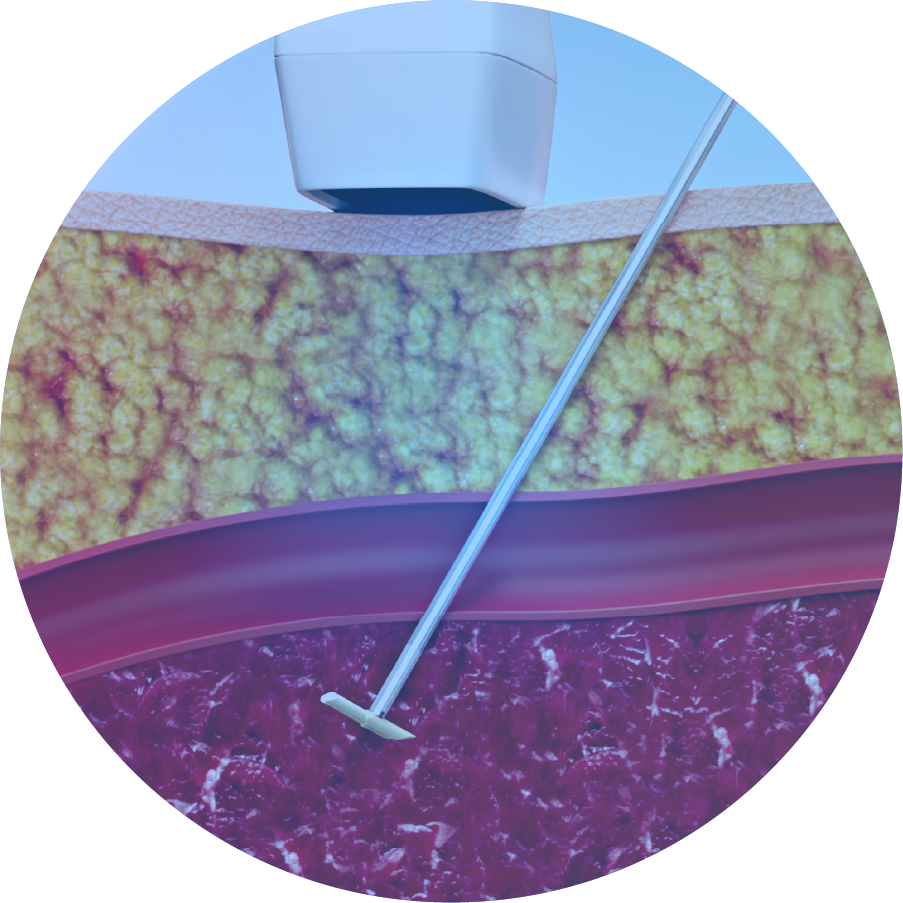
A percutaneous, minimally invasive clip that mechanically occludes the vein.

VEnice™ gives clinicians a distinct mechanical option for superficial and perforator venous vessels. Delivered under ultrasound guidance, its implantable clip mechanically occludes the targeted vein without thermal energy or adhesives. 

Hear from VCD Medical leaders and clinical experts

Francesco Piccagli, Denna Babul and Steve Elias, MD, discuss gaps in the current venous treatment landscape, where targeted mechanical closure may fit, and the clinical scenarios VEnice™ is designed to address.

WATCH FULL INTERVIEW

VEnice™ adds mechanical closure to the treatment landscape.

Established venous treatments use a range of mechanisms to close or eliminate incompetent veins, including surgical, thermal, adhesive, sclerosant-based and mechanochemical approaches.

VEnice™ expands that landscape with a distinct percutaneous mechanical approach that occludes the targeted vein without thermal energy or adhesives.

SURGICAL

Physical ligation and/or removal of the vein

Examples: ligation, stripping, phlebectomy

MECHANICAL CLOSURE

An implantable clip mechanically occludes the targeted vein

THERMAL

Heat-induced vessel-wall injury and closure

Examples: radiofrequency ablation, endovenous laser

MECHANICAL CLOSURE

An implantable clip mechanically occludes the targeted vein

SURGICAL

Physical ligation and/or removal of the vein

Examples: ligation, stripping, phlebectomy

THERMAL

Heat-induced vessel-wall injury and closure

Examples: radiofrequency ablation, endovenous laser

Adhesive

Medical adhesive seals the vein

Examples: cyanoacrylate closure

MECHANOCHEMICAL

Mechanical vessel-wall disruption combined with sclerosant

Example: MOCA

SCLEROSANT-BASED

Chemical injury to the vein lining promotes closure

Examples: liquid or foam sclerotherapy

WHERE VEnice™ MAY FIT

Built for a wide range of vein categories.

VEnice™ gives clinicians another approach to consider when treatment planning calls for targeted mechanical closure. Delivered percutaneously under ultrasound guidance, it can be used in superficial and perforator venous vessels, including tortuous anatomy.

VEnice™ may be used at one or more treatment locations during an outpatient procedure, allowing clinicians to tailor treatment based on anatomy, treatment goals and individual patient needs.

Combined use with foam

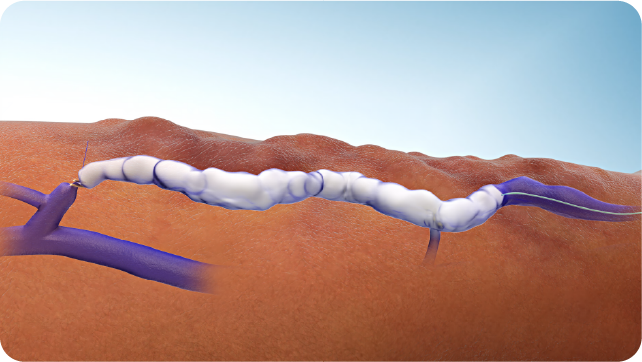
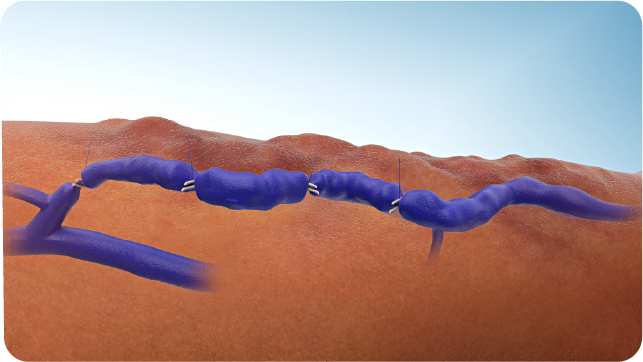
Tortuous GSV, multiple selective closures

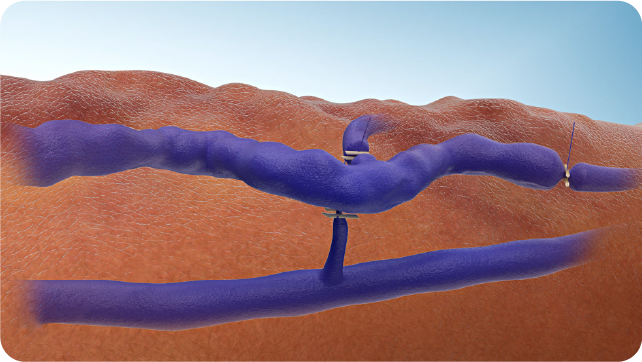
Selective closure of branches and perforators

Physician Perspective

From ultrasound visualization to direct percutaneous treatment

Bergamaschi

For VEnice™ inventor and clinical advisor Gastone Bergamaschi, MD, routine ultrasound use helped shape the idea for a percutaneous device that could directly target and occlude pathologic veins.

“By examining patients and directly visualizing venous pathology on the screen, it was only natural to conceive of a device that, guided by ultrasound, would allow for direct, percutaneous treatment through targeted vascular occlusions.”

Bergamaschi
I saw the need for a minimally invasive treatment in the market. I wanted to design something with ease of use in mind. A percutaneous device without the need for tumescent that would be safer and much more comfortable for the patient.
Bergamaschi
Candidly, the “market’s” demand for minimally invasive and outpatient treatments—including for venous disorders of the lower extremities where the results of ablative procedures are not satisfactory—were leading to a higher rate of recurrence, multiple medical and surgical interventions, increased costs, and longer recovery times. It wasn’t the best we could do for our patients, so I wanted to change that.
Bergamaschi
Unlike decades ago, phlebologists now routinely use ultrasound. By examining patients and directly visualizing venous pathology on the screen, it was only natural to conceive of a device that, guided by ultrasound, would allow for the direct, percutaneous treatment of varicose veins through targeted vascular occlusions.
Bergamaschi
Targeted ligation of pathological venous vessels—particularly the great saphenous vein—using minimally invasive access, which, when combined with ablation procedures such as sclerotherapy with Polidocanol foam, results in a higher rate of occlusion in the long-term follow-up and, consequently, better clinical outcomes even when compared to thermal procedures or open surgery.
Bergamaschi
Although our clinical experience is limited to approximately 50 patients with varicose veins disease, the results are fascinating so far. The device is intuitive and versatile. Along with its ease of use, it can be used alone or in combination with other ablative procedures; on the great saphenous vein or on other venous areas such as collaterals or perforating veins; areas we have shed away from due to not having great options until now. The patient impact has been exciting to see. A pain free procedure with local anesthesia is a game changer.
Bergamaschi

Certainly. Outpatient treatment of large-caliber venous vessels (e.g., great saphenous vein), which poses a challenge for both thermal and non-thermal ablation procedures. We also were able to treat perforators, and tortuous truncal and non-truncal veins.
Patient Case

When venous disease disrupted an active life

HER STORY

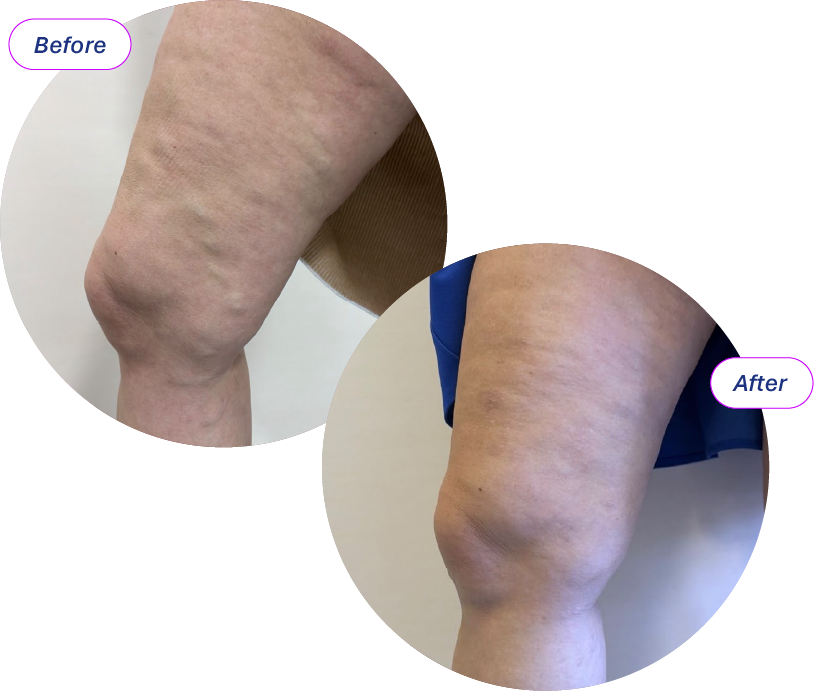
At 50, she was highly active, routinely exercising for up to two hours a day. As her venous disease progressed, daily leg pain, moderate edema and visible skin changes began interfering with walking and everyday activities, eventually forcing her to give up the exercise routine that had been such a regular part of her life.

BEFORE TREATMENT
Daily leg pain, moderate edema and diffuse skin pigmentation changes, with varicose veins involving the right calf and thigh.

TREATMENT
Clinicians used the VEnice™ Vein Closure Device to treat the GSV and SV.

OUTCOME
Pain-free and back to the active lifestyle she had lost, including walking for up to two hours a day.

See how VEnice™ delivers mechanical closure.

Explore the technology or connect with VCD Medical to learn more about targeted mechanical closure and VEnice™.